
Candles wick
Showing 1–12 of 19 results
-


-
 €1.61 €56.98Price range: €1.95€1.61 through €68.95€56.98 incl. VAT inc. VATExcl. VATSelect options This product has multiple variants. The options may be chosen on the product page
 -
 €2.95€2.44 incl. VAT inc. VATExcl. VATSelect options This product has multiple variants. The options may be chosen on the product page
 -
-
-
 €2.44 €144.59Price range: €2.95€2.44 through €174.95€144.59 incl. VAT inc. VATExcl. VATSelect options This product has multiple variants. The options may be chosen on the product page
 -

 €4.09 €305.74Price range: €4.95€4.09 through €369.95€305.74 incl. VAT inc. VATExcl. VATSelect options This product has multiple variants. The options may be chosen on the product page
 -
 €5.74 €537.15Price range: €6.95€5.74 through €649.95€537.15 incl. VAT inc. VATExcl. VATSelect options This product has multiple variants. The options may be chosen on the product page
 -
 €0.79 €20.62Price range: €0.95€0.79 through €24.95€20.62 incl. VAT inc. VATExcl. VATSelect options This product has multiple variants. The options may be chosen on the product page
 -
-
 €1.03 €28.88Price range: €1.25€1.03 through €34.95€28.88 incl. VAT inc. VATExcl. VATSelect options This product has multiple variants. The options may be chosen on the product page
 -






Showing 1–12 of 19 results
Candle Wicks
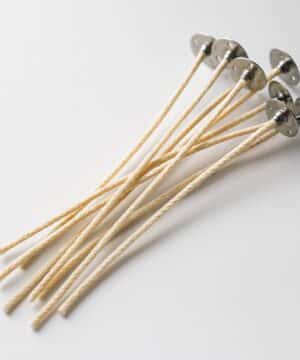
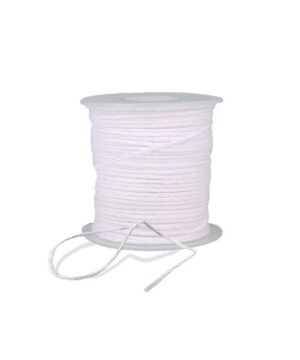
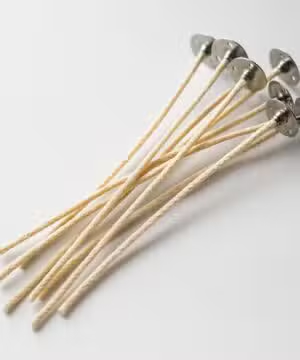
Candle wicks are the structural core of every candle making project. The correct wick size and type directly affect flame stability, melt pool formation, scent throw, and overall burn performance. Even with high-quality wax and fragrance oils, an incorrect candle wick can lead to tunneling, excessive soot, weak scent diffusion, or overheating.
Selecting the right candle wick for soy wax, paraffin, beeswax, or blended wax systems is one of the most critical steps in candle making. From cotton candle wicks to wooden candle wicks, this category includes reliable options designed for different wax types, container diameters, and fragrance loads.
How Candle Wicks Work in Candle Making
In candle making, a wick functions through capillary action. Once lit, melted wax travels upward through the wick fibers to fuel the flame. The wick diameter, braid structure, and material determine:
- Flame height
- Melt pool diameter
- Burn rate
- Carbon buildup
- Overall candle safety
Proper wick selection ensures consistent and safe candle making results.
Choosing the Right Wick Size for Candle Making
Wick size is not universal in candle making. The correct choice depends on multiple formulation variables, and even small adjustments can significantly impact flame behavior and melt pool consistency.
Container Diameter
Larger diameters require thicker or double wicks to achieve a full melt pool. If the wick is too small for the container width, tunneling may occur, leaving unmelted wax around the edges.
Wax Type
- Soy wax: typically requires larger wick sizes
- Paraffin: often burns hotter, may require smaller wick
- Beeswax: denser structure, requires stronger capillary pull
Cotton vs Wooden Candle Wicks
Different wick materials create distinct aesthetic and performance results in candle making. Cotton candle wicks are known for their stable, consistent flame and reliable burn behavior. They are suitable for most wax types, available in multiple braid styles, and work well for both beginner and advanced candle making projects where predictable performance is essential.
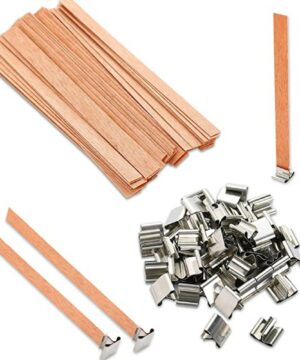
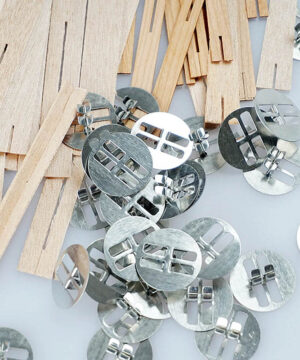
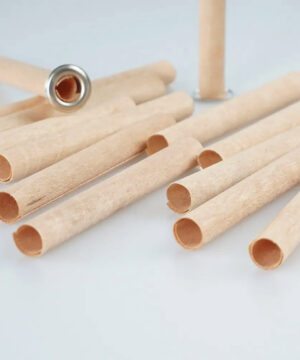
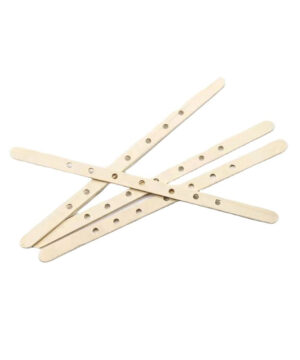
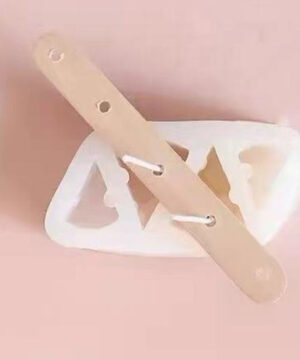
Wooden candle wicks offer a more modern, design-focused look with a subtle crackling sound while burning. Their wider, horizontal flame helps create a strong melt pool, making them especially popular in premium container candle making. The choice between cotton and wooden wicks depends on your desired burn performance and overall candle style.
Benefits of Choosing the Right Candle Wick
Using the correct candle wick improves both performance and safety in candle making:
- Cleaner, more even burn
- Reduced tunneling
- Improved scent throw
- Controlled flame height
- Longer-lasting candles
- Professional-quality finish
- More predictable burn testing results
How to Use Candle Wicks in Candle Making
Proper wick installation and testing are essential for safe candle making performance.
- Select wick size based on container diameter and wax type
- Secure the wick centrally using wick stickers or glue dots
- Use a wick holder to maintain alignment during pouring
- Trim wick to approximately 5 mm before lighting
- Conduct at least one full burn cycle test (3–4 hours)
- Adjust wick size if tunneling or overheating occurs
Testing is a crucial step in successful candle making.
Start Your Candle Making Project
From cotton candle wicks to wooden candle wicks, YouWish offers carefully selected options suitable for various wax systems and container sizes. Whether you’re just starting candle making or refining a production formula, you can buy candle wicks designed for stable, clean burning.
Explore the full range and choose the right candle wick size for your candle making projects to achieve safer, longer-lasting, and professionally finished candles.


