
- Freshness of milk
If you use raw, fresh goat milk without pasteurizing or freezing it first, bacteria or enzymes may remain active. - Not complete saponification of milk fats
Goat milk contains fats and proteins. If the saponification is not complete, there may remain residues that spoil. - Excess milk or sugar
Goat milk contains natural sugars (lactose) that can serve as food for fungi and bacteria, especially when stored in moist conditions. - Storage conditions
Storing in a humid or warm place (such as a bathroom) increases the risk of mold. - Too much water in your recipe (high water phase)
The more water in the recipe, the slower the soap cures and the greater the chance of spoilage.
How can you avoid this?
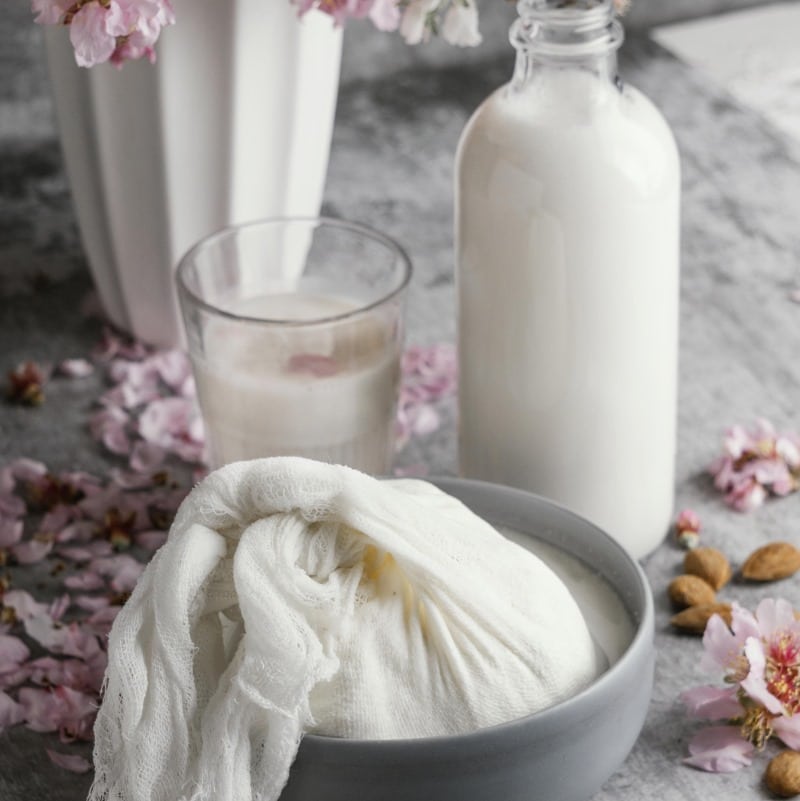
- Use frozen goat milk
Freeze the goat milk in ice cubes and slowly add it to the lye. This prevents burning of the milk and kills bacteria due to the lye heat. - Work with a lower water volume (water discount)
For example, use only 30% of total fats in water/leach solution instead of standard 38%. This causes the soap to harden faster. - Allow the soap to fully cure and dry (at least 6 weeks)
Ensure a dry, well-ventilated room while the soap is maturing (curing). - Add natural preservatives
For example, rosemary extract or vitamin E can help against rancidity, although it does not kill mold. - Clean your materials thoroughly
Make sure your pans, spatulas and molds are clean and dry to avoid contamination. - If necessary, use goat milk powder instead of fresh milk
Goat milk powder is more stable and less prone to spoilage. You can add this at the end of the trace with a little water to dissolve it.


