
Did you know that the rich red hue in many commercial lipsticks comes from crushed scale insects? For many beauty makers, learning this comes as quite a shock. Fortunately, choosing an ethical approach doesn’t mean compromising on color payoff or product performance. When you formulate your own cosmetics, you gain complete control over every ingredient that touches your skin. This guide covers how to identify hidden animal-derived ingredients and choose high-performing, plant-based alternatives for your handmade makeup.
What Exactly Is Vegan Makeup?
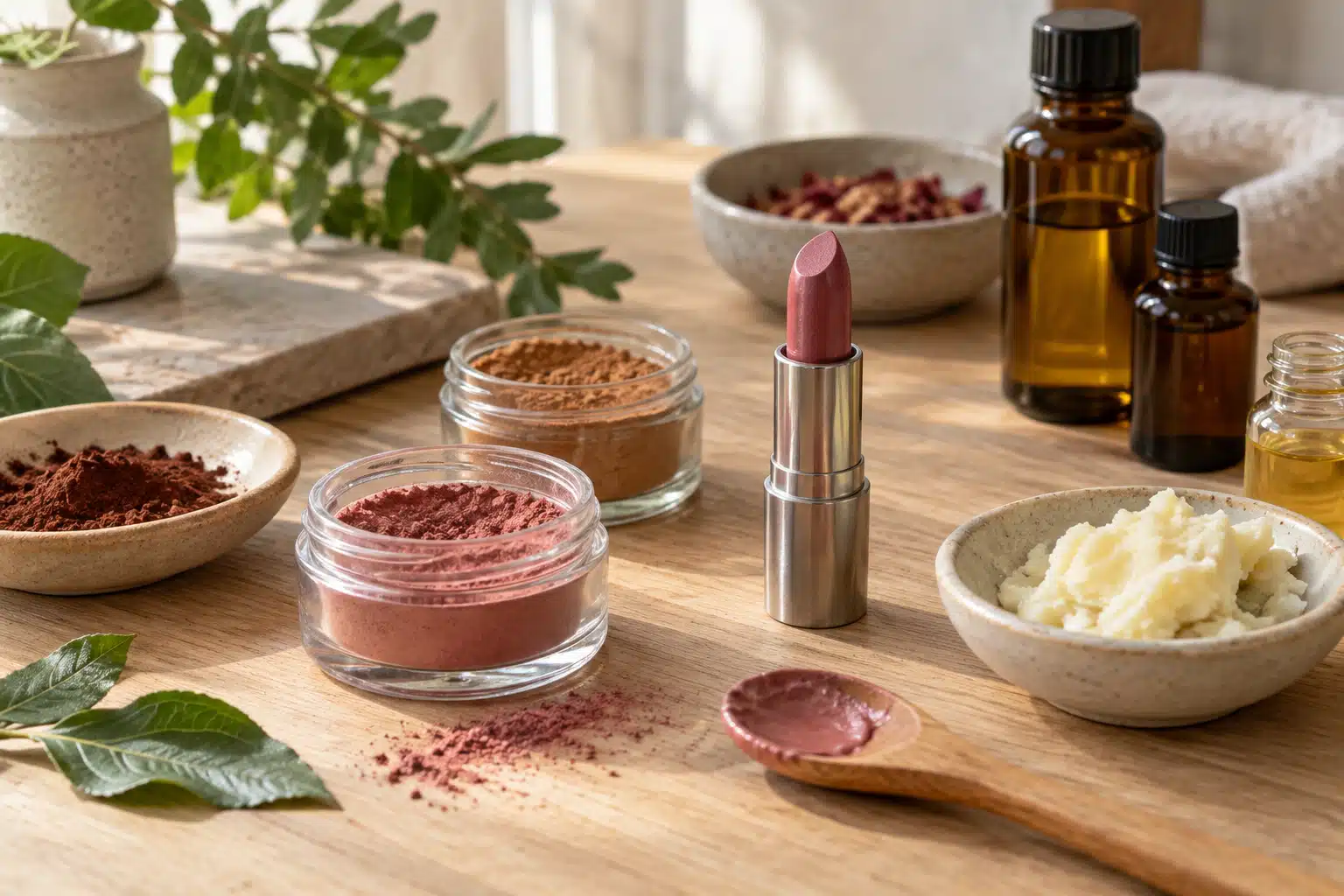
In cosmetic formulating, “vegan” has a precise definition: the recipe contains zero ingredients or by-products of animal origin. This goes beyond avoiding animal fats; it also rules out ingredients such as beeswax, honey, and silk proteins. Formulating vegan makeup means committing exclusively to plant-derived and mineral raw materials.
The Difference Between Vegan and Cruelty-Free
While often used interchangeably, “vegan” and “cruelty-free” refer to two distinct standards. Cruelty-free means that neither the finished cosmetic nor its raw ingredients were tested on animals—a legal requirement across the European Union for all cosmetics sold since 2013. However, a cruelty-free product can still contain animal by-products, such as lanolin extracted from sheep’s wool. For the conscious formulator, the goal is uniting both standards: 100% animal-free ingredients crafted without animal testing. To explore mindful formulating further, read our guide on conscious beauty with non-toxic makeup.
Animal-Derived Ingredients and Plant-Based Alternatives
Several common cosmetic ingredients sound harmless despite coming directly from animal sources. When checking labels or ordering raw ingredients, keep an eye out for these culprits:
- Carmine (CI 75470): Derived from crushed cochineal scale insects, this pigment produces intense crimson and scarlet shades in lipsticks and blushes. Excellent plant- and mineral-based alternatives include iron oxides, micas, and natural colorants.
- Beeswax (Cera Alba): A classic thickener that gives lip balms and salves firmness and barrier protection. Candelilla wax, carnauba wax, and soy wax make fantastic plant-based swaps with great film-forming properties.
- Guanine (CI 75170): Harvested from fish scales, guanine creates an iridescent, pearlescent shimmer in nail enamels and eye shadows. Mineral mica provides the exact same luminous finish without harming marine life.
- Lanolin (Adeps Lanae / Wool Wax): A dense, waxy substance secreted by sheep’s sebaceous glands. While deeply emollient, it is not vegan. Replace it with nourishing oils and butters such as cocoa butter, coconut oil, or jojoba oil.
- Glycerin and Stearic Acid: These versatile formulation staples can be derived from either animal tallow or plants. At YouWish, we supply only 100% plant-based, pharmaceutical-grade glycerin sourced from rapeseed oil.
-
€4.92 €1,446.24Price range: €5.95€4.92 through €1,749.95€1,446.24 incl. VAT inc. VATExcl. VATSelect options This product has multiple variants. The options may be chosen on the product page
-
 €2.44 €229.95Price range: €2.95€2.44 through €229.95€229.95 incl. VAT inc. VATExcl. VATSelect options This product has multiple variants. The options may be chosen on the product page
 -
€7.49 €269.95Price range: €7.49€7.49 through €269.95€269.95 incl. VAT inc. VATExcl. VATSelect options This product has multiple variants. The options may be chosen on the product page



Decoding INCI Lists and Ingredient Labels
The International Nomenclature of Cosmetic Ingredients (INCI) is the standardized global labeling system for cosmetic components. It pairs Latin botanical names with standardized chemical terms so formulators know exactly what is in a formula. Ingredients appear in descending order of concentration down to the 1% threshold; below 1%, they may be listed in any order, with colorants (CI numbers) placed at the end.
To make navigating these terms second nature, consult our guide to cosmetic INCI names. For example, unrefined shea butter appears as Butyrospermum Parkii, while castor oil is listed as Ricinus Communis. When working with pigments, look for Color Index (CI) numbers toward the bottom of the list. If you are ever uncertain whether an ingredient is plant-derived or animal-sourced, request a Certificate of Analysis (CoA) or supplier declaration. You can find more pointers in our guide to vegan alternatives to traditional makeup ingredients.
Natural Colorants and Mineral Pigments
Color is the creative heartbeat of makeup formulation. Rather than relying on insect- or animal-derived colorants, you can achieve vibrant shades using mineral pigment powder and mica powder. These finely milled minerals deliver rich opacity and dimensional shimmer—without a trace of crushed insects or fish scales.
Whether you are crafting custom lipsticks, powdered blushes, or liquid foundations, mineral pigments offer remarkable versatility. To create smooth, skin-true foundations that feel weightless on the skin, see our guide to formulating natural skin tones with mica powder. For more ideas and tutorials, explore our hub covering everything about making makeup and our overview of mineral makeup for sensitive skin.
-
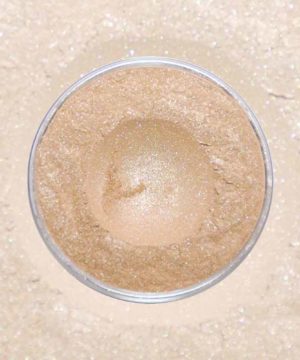 €1.95 €27.25Price range: €1.95€1.95 through €27.25€27.25 incl. VAT inc. VATExcl. VATSelect options This product has multiple variants. The options may be chosen on the product page
 -
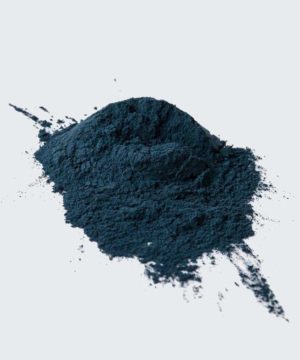 €1.95 €324.95Price range: €1.95€1.95 through €324.95€324.95 incl. VAT inc. VATExcl. VATSelect options This product has multiple variants. The options may be chosen on the product page
Rich Plant Butters and Oils for Your Formulations
Plant butters form an exceptional, nourishing base for balms, lipsticks, and cream formulas. Shea butter, packed with vitamins A and E, actively supports healthy barrier repair—essential support, considering our skin sheds roughly 30,000 to 40,000 dead cells every single day.
Different botanical butters offer distinct textures and skin feels:
- Kokum butter: A firm, dry-feeling butter that stabilizes formulas and absorbs quickly without leaving a greasy sheen.
- Murumuru butter: Abundant in beneficial lauric and oleic acids, making it a powerhouse for replenishing dry or irritated skin.
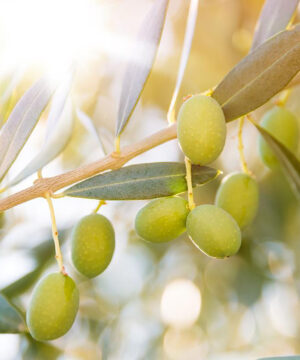
- Olive squalane: An ultra-lightweight, plant-based lipid that mimics the skin’s natural sebum, improves elasticity, and provides effortless glide without clogging pores.
Discover more options in our curated selection of the best natural ingredients for makeup products.
-
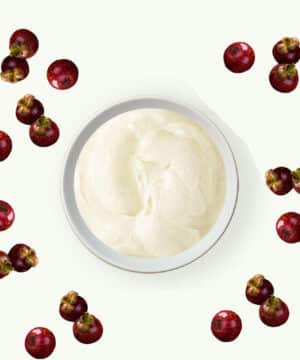 €7.40 €330.54Price range: €8.95€7.40 through €399.95€330.54 incl. VAT inc. VATExcl. VATSelect options This product has multiple variants. The options may be chosen on the product page
 -
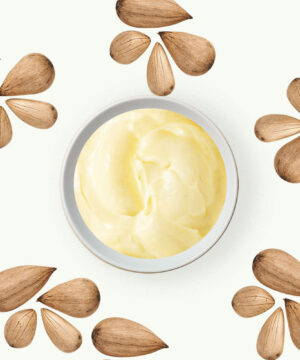
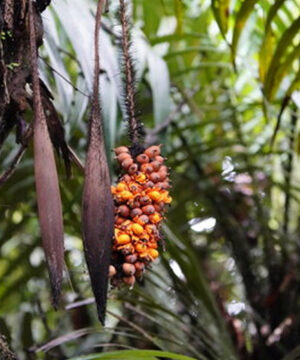 €7.95 €1,455.95Price range: €7.95€7.95 through €1,455.95€1,455.95 incl. VAT inc. VATExcl. VATSelect options This product has multiple variants. The options may be chosen on the product page
 -
 €17.39 €509.95Price range: €18.95€17.39 through €509.95€509.95 incl. VAT inc. VATExcl. VATSelect options This product has multiple variants. The options may be chosen on the product page



Getting Started with Your Own Vegan Cosmetics
Crafting your own cosmetics is empowering and creative. You curate the exact ingredients that go onto your skin while keeping animal products out of your beauty routine. Start with a straightforward project, like a soothing tinted lip balm or a simple mineral powder. As you become familiar with how different waxes, butters, and pigments behave, you can expand your workspace and formulate advanced recipes. Pick out your favorite botanical raw materials today and start handcrafting your own clean, vegan makeup.


