
Few things are more frustrating when making perfume than spending hours perfecting an accord, only to find it fades from the skin within thirty minutes. Commercial perfumes last because they rely on the strategic use of fixatives. Acting as an anchor, a fixative binds volatile aroma molecules and significantly slows down their rate of evaporation.

How Fixatives Work
Aroma compounds evaporate at drastically different speeds. Light, effervescent citrus top notes flash off almost immediately, whereas dense base notes linger on the skin for hours. A fixative works by lowering the vapor pressure of the more fleeting elements in your blend.
This happens either through physical entrapment—creating a molecular matrix around lighter compounds—or through chemical bonding with natural resins. The warmth of the skin then releases the scent gradually over time rather than all at once. The result is a smooth, balanced drydown that endures throughout the day. To see how these layers work in tandem, it helps to understand the fragrance pyramid.
Types of Fixatives for Fragrance Makers
Selecting the right fixative depends entirely on your carrier and formulation style. Alcohol-based perfumes call for a different approach than oil-based or solid blends.
Natural Resins and Woods
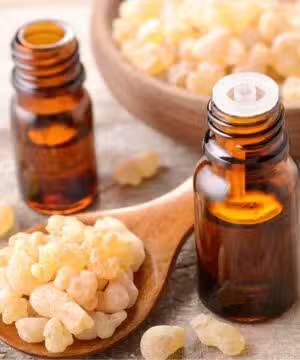
Heavy botanical base notes naturally double as exceptional fixatives. Rich, balsamic materials anchor lively top notes, while earthy and woody oils provide a warm, enduring foundation:
- Benzoin essential oil imparts a warm, vanilla-like sweetness while anchoring lighter facets.
- Myrrh essential oil adds a deep, earthy, balsamic character that secures the base.
-
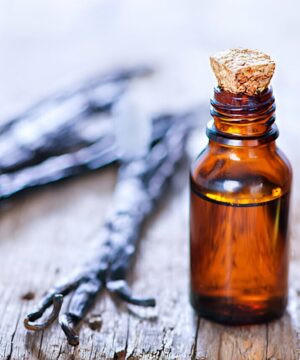 €8.22 €6,611.57Price range: €9.95€8.22 through €8,000.00€6,611.57 incl. VAT inc. VATExcl. VATSelect options This product has multiple variants. The options may be chosen on the product page
 -
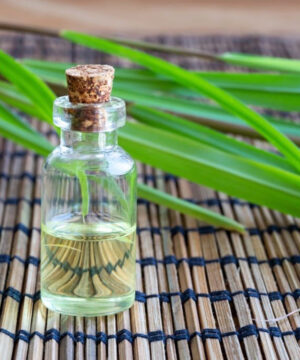 €10.70 €710.70Price range: €12.95€10.70 through €859.95€710.70 incl. VAT inc. VATExcl. VATSelect options This product has multiple variants. The options may be chosen on the product page
 -
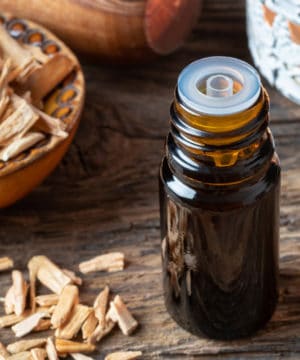 €4.92 €371.86Price range: €5.95€4.92 through €449.95€371.86 incl. VAT inc. VATExcl. VATSelect options This product has multiple variants. The options may be chosen on the product page
 -
€2.69 €132.19Price range: €3.25€2.69 through €159.95€132.19 incl. VAT inc. VATExcl. VATNotify me when in stock This product has multiple variants. The options may be chosen on the product page
-
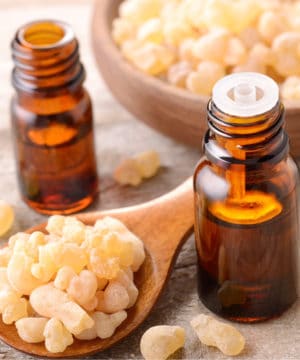 €6.57 €991.69Price range: €7.95€6.57 through €1,199.95€991.69 incl. VAT inc. VATExcl. VATSelect options This product has multiple variants. The options may be chosen on the product page


Synthetic Fixatives and Musks
Modern perfumery relies heavily on aroma molecules such as Iso E Super, Ambroxan, and synthetic white musks for lasting power. They provide a clean, transparent backdrop that supports your main accords without overpowering them. However, balance is essential: overdosing potent synthetics can easily flatten the delicate nuances of your blend.
Odorless Solvents and Carriers
Dipropylene glycol (DPG) is a neutral solvent with natural fixative properties. It reduces the overall volatility of essential oils without altering their scent profile. When formulating an alcohol-based perfume, verify that your chosen fixative dissolves completely in your perfumer’s alcohol to prevent hazing or separation.
-
 €4.09 €826.45Price range: €4.95€4.09 through €1,000.00€826.45 incl. VAT inc. VATExcl. VATSelect options This product has multiple variants. The options may be chosen on the product page
 -
 €7.40 €1,900.83Price range: €8.95€7.40 through €2,300.00€1,900.83 incl. VAT inc. VATExcl. VATSelect options This product has multiple variants. The options may be chosen on the product page
Dosage and Incorporation into Your Formula
Order of addition plays a major role in the stability of your fragrance. Follow a structured workflow:
- Balance your scent profile carefully before adding modifiers. For guidance on proportions, explore our guide on combining perfume notes.
- Blend the fixative directly into your concentrated oil compound before introducing any alcohol. This gives the molecules ample time to interact and bind.
- Add your alcohol. When blending fragrance oils for perfume, aim for a 15% to 20% fragrance concentrate to achieve an Eau de Parfum concentration.
- Let the blend macerate in a cool, dark space for at least two to four weeks. Learn more about storing DIY perfume to maintain optimal aging conditions.
For liquid fixatives like DPG, allocate roughly 2% to 5% of your total fragrance concentrate to the fixative. Resinous materials should generally comprise 5% to 10% of your total oil blend. If you also want your creation to leave a memorable trail in the air, discover how to improve perfume sillage.
Safety and Testing Your Fragrance
Always adhere to IFRA standards and review the allergen profiles of your raw materials. Concentrated aroma chemicals and natural resins can cause skin sensitization if used improperly. Always wear protective gloves and eye protection when handling neat ingredients.
Before scaling up a formula, mix a small test batch and allow it to macerate for four to six weeks. Test it directly on blotters and skin to evaluate its longevity, projection, and drydown over time.
Ready to source materials for your next formulation? Browse our selection of essential oils for perfume or choose a pre-formulated perfume fragrance oil. You can also pick up a high-quality perfume base or explore all essential oils to give your artisanal blends professional staying power.


