
A wick is more than just a string that burns. It actually works like a little pump. The heat from the flame melts the wax, and the wick draws up that liquid fuel through capillary action. If your wick is too thin, the pump isn’t powerful enough. The candle will then burn a narrow tunnel straight down, and the edges won’t melt. The flame will eventually be smothered by its own wax because it isn’t getting enough oxygen.
If you choose a wick that’s too thick, the pump will work too hard. The flame will get too high, start to flicker, and produce black smoke. In addition, this can cause the glass to become dangerously hot. The goal is a stable flame and a molten pool that reaches the rim of your glass after about 3 to 4 hours of burning.
Measure the diameter of your pot or mold
It all starts with the size. Grab your measuring tape or caliper. For container candles, always measure the inner diameter of the glass, not the outside. Up to a diameter of about 7.5 cm, a single wick is usually sufficient. This is the standard size for most whiskey glasses and jam jars.
Is your container wider than 8 or 9 cm? If so, it will be difficult for a single wick to create a full melt pool without flickering. In that case, you’ll likely need two or even three wicks. If you opt for double-wicking, divide the diameter by two to find the correct size. A 10-cm jar therefore needs two wicks, each suitable for a diameter of 5 cm. In our guide on how to prevent an off-center candle wick, you can read how to distribute these wicks perfectly throughout the jar.
-
 €1.03 €28.88Price range: €1.25€1.03 through €34.95€28.88 incl. VAT inc. VATExcl. VATSelect options This product has multiple variants. The options may be chosen on the product page
 -


The best wick for your type of wax
Not all candle wax burns the same. The viscosity of the melted wax determines how hard the wick has to work.
- Soy wax: Plant-based waxes become thicker when they melt. You’ll need a wick that burns at a slightly higher temperature, such as the TCR series or the Eco series. The TCR is a flat-braided cotton wick with a paper core that is known for its excellent burning performance in soy wax.
- Paraffin: This material burns more easily. A wick that burns too hot will immediately produce soot. The Stabilo (CD) series is often the best choice for a steady flame.
- Beeswax: This wax has a high melting point and is very viscous. A standard cotton wick often gets submerged in it. You’ll need a thick, round wick that has been specially treated for beeswax.
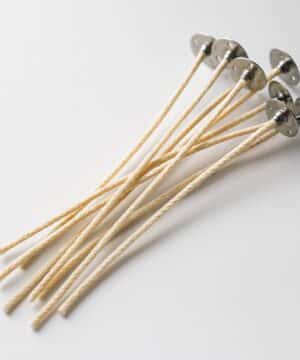
- Wooden wicks: These produce that familiar, cozy crackling sound. They work with almost any type of wax, but you need to pay close attention to the correct width. If a wooden wick keeps going out, it’s probably too narrow for the diameter of your jar.
-
 €1.61 €56.98Price range: €1.95€1.61 through €68.95€56.98 incl. VAT inc. VATExcl. VATSelect options This product has multiple variants. The options may be chosen on the product page
 -
 €2.95€2.44 incl. VAT inc. VATExcl. VATSelect options This product has multiple variants. The options may be chosen on the product page
 -
 €2.95€2.44 incl. VAT inc. VATExcl. VATSelect options This product has multiple variants. The options may be chosen on the product page
 -
 €1.61 €74.34Price range: €1.95€1.61 through €89.95€74.34 incl. VAT inc. VATExcl. VATSelect options This product has multiple variants. The options may be chosen on the product page
 -
 €1.61 €74.34Price range: €1.95€1.61 through €89.95€74.34 incl. VAT inc. VATExcl. VATSelect options This product has multiple variants. The options may be chosen on the product page
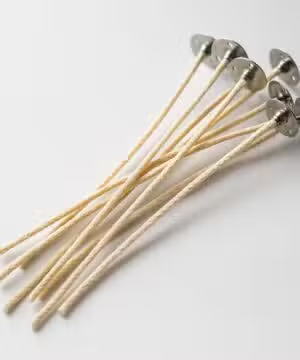


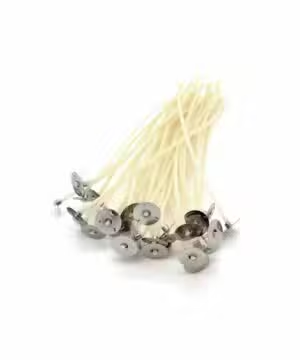
Guidelines for Selecting the Right Size
These tables will help you get started, but keep in mind that these are just guidelines. The amount of fragrance oils and dye has a huge impact on the burn. In our guide to making candles with fragrance oils, we explain that a dark, heavily scented candle often requires a larger size than a white, unscented version.
TCR-Lonten Guidelines (Ideal for Soybeans)
- 38–50 mm: TCR 21/12
- 50–57 mm: TCR 24/12
- 57–63 mm: TCR 24/14
- 63–75 mm: TCR 27/16
- 75–83 mm: TCR 30/18
Stabilo (CD) Wicks (ideal for paraffin and blends)
- 45–50 mm: Stabilo 6
- 55–60 mm: Stabilo 8
- 60–65 mm: Stabilo 10
- 65–70 mm: Stabilo 12
- 70–75 mm: Stabilo 14
- 75–80 mm: Stabilo 16
For small projects like tea lights, you’ll need shorter wicks. Check out our selection of tea light wicks.
-
 €2.95€2.44 incl. VAT inc. VATExcl. VATSelect options This product has multiple variants. The options may be chosen on the product page
 -
 €1.61 €66.07Price range: €1.95€1.61 through €79.95€66.07 incl. VAT inc. VATExcl. VATSelect options This product has multiple variants. The options may be chosen on the product page
 -
€1.61 €66.07Price range: €1.95€1.61 through €79.95€66.07 incl. VAT inc. VATExcl. VATSelect options This product has multiple variants. The options may be chosen on the product page


Conducting the Fire Test
There’s no magic formula that works every time. The golden rule is the burn test. Make your candle and let it cure for at least 48 hours. With soy wax, this can even take one to two weeks for the best results.
Light the candle and let it burn until the entire surface has melted. Allow about 1 hour per 2.5 cm of diameter. Take a close look at the flame. Is it steady? Is it smoking? Is the pool of melted wax about 1 cm deep? Is there still a thick ring of hard wax clinging to the glass after 4 hours of burning? If so, you’re experiencing tunneling, and your wick is likely too small. You can read more about how to fix candle tunneling in our detailed blog post.
On the other hand, is a black carbon ball (a “mushroom”) forming at the end of your wick? This often means that the wick is too long or that too much Fragrance oil has been used. Always trim your wick to 5 mm before use. A good pair of candle wick scissors will help you do this precisely without contaminating the wax.


Difference Between Containers and Pillar Candles
Most candle makers start with container candles, but different rules apply to freestanding pillar candles. Because a pillar candle doesn’t have glass to retain the heat, you often need a slightly thicker wick than you would for a container of the same diameter. But be careful: if the wick is too large for a pillar candle, the sides will melt through too quickly and the liquid wax will leak onto the table.
When making a beeswax candle in a mold, you need to pay extra attention to the melting point. You can find more information about wick length for different candle shapes on our page about candle wick length.
Finding the right combination of wick, wax, and diameter is a process of trial and error. Start with the recommendations in the tables and begin your own experiment. Once you’ve found that calm, steady flame, you’ll know your recipe is ready for production. Check out our full selection of candle wicks to get started right away.


