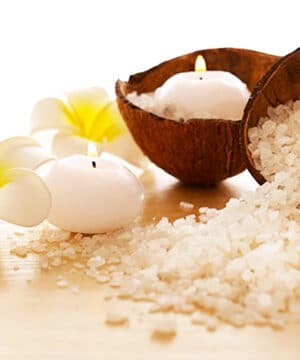
You’ve probably been there before. You spend hours melting, pouring, and letting a beautiful new candle cure. You light it with high hopes, wait for the wax to melt, and… nothing. You smell almost nothing. Or worse, there’s a greasy layer of oil floating on top of your candle. It is frustrating, but fortunately, it is also easy to fix.
The secret to a candle that smells as good as it looks isn’t just about the quality of the oil; it is primarily about technique. It comes down to timing, temperature, and chemistry. If you add fragrance oil to wax that is too hot, the scent evaporates before the candle is even in the jar. If the wax is too cold, the oil won’t bind properly. In this article, we dive into the exact temperatures and ratios you need for the perfect scent throw.

Why Temperature is Key
Many beginners assume you can just pour fragrance oil in at any point during the melting process. Unfortunately, wax doesn’t work that way. Candle wax has a crystalline structure that expands when heated and contracts as it cools. You need to add the fragrance oil at the exact moment the wax is most receptive to absorbing it, but not so hot that the fragrance molecules burn off or evaporate.
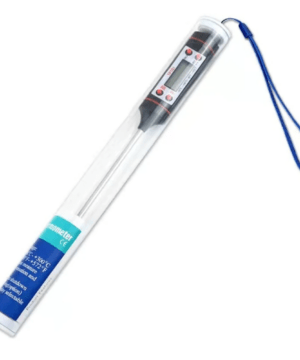
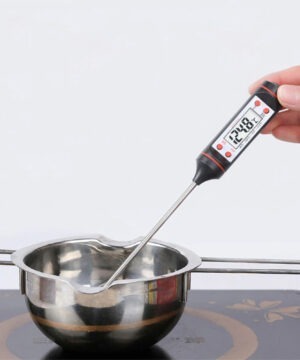
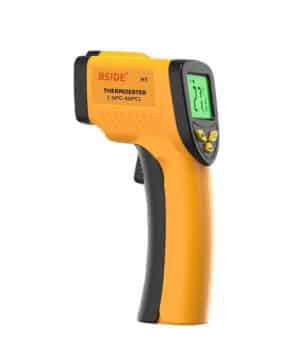
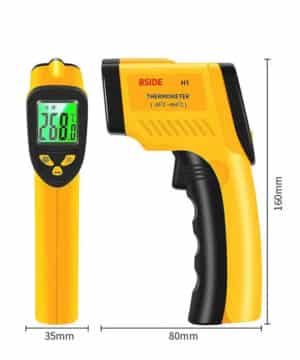
This requires precision. Every fragrance oil has a flash point. If your wax is significantly hotter than this point, the oil begins to evaporate immediately. For citrus oils like lemon or orange, this point is often lower, around 60-65°C. These notes dissipate quickly if you aren’t careful. Heavier scents like wood or vanilla are generally more stable. To get this right, you cannot work by guessing. A reliable thermometer is indispensable.
Step-by-Step Guide for a Perfect Blend
Whether you are working with soy wax, rapeseed wax, or paraffin, the basic rules remain largely the same. Follow these steps for the best results.
Melt the wax gently
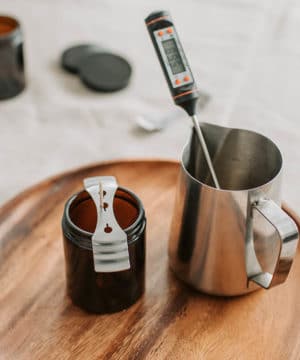
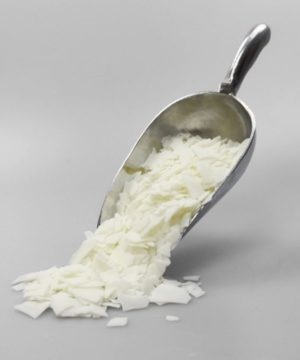
Melt your wax in a double boiler or a melting pot. Most wax types need to be heated to approximately 70°C to 75°C to fully liquefy. Be careful not to keep the wax above 90°C for an extended period, as this can discolor the wax or damage its structure.
Check the temperature before adding
Here is where many people make a mistake. Remove the pan from the heat source before adding the scent. For synthetic candle fragrance oil, a temperature around 70°C to 80°C is often ideal. At this temperature, the wax molecules are expanded enough to bind effectively with the oil.
Are you working with essential oils? These are much more volatile. Research shows the optimal temperature for adding essential oils to wax is 60-65°C. If you add them at higher temperatures, you lose much of the therapeutic benefits and scent strength.
The 2-minute rule
This is perhaps the most critical step that gets skipped. After pouring the fragrance into the wax, you must stir. Don’t just give it three quick swirls; stir gently and thoroughly for at least two full minutes.
You are trying to mix oil with wax, and they need help to form a stable bond. By stirring for two minutes, you ensure the fragrance molecules are evenly distributed. If you don’t do this, you will get spots in the candle with heavy scent and spots with none. In extreme cases, pockets of unmixed oil can even lead to fire hazards. Read more about how to solve candle mixing problems.
Pour at the right temperature
After mixing, let the wax cool further to its pouring temperature. For many types of soy wax, such as Golden Wax 464, this is usually around 50-60°C. If you pour too hot, you often end up with sinkholes, caving, or rough tops.
-
€6.95 – €139.95 incl. VAT Select options This product has multiple variants. The options may be chosen on the product page
-
€5.95 – €3,300.00 incl. VAT Select options This product has multiple variants. The options may be chosen on the product page
-
€3.95 – €125.00 incl. VAT Select options This product has multiple variants. The options may be chosen on the product page
How Much Fragrance Oil Should I Use?
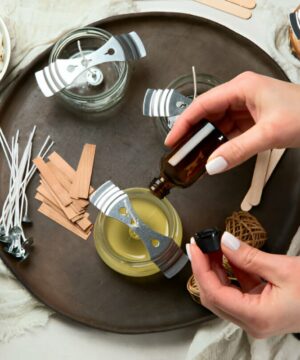
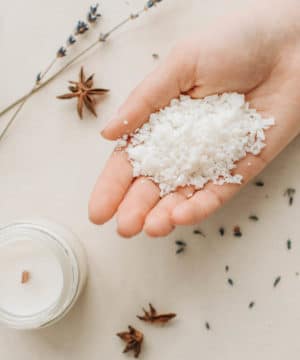
More is not always better. If you add too much oil, the wax simply cannot hold it because it becomes saturated. The result is that the oil starts to “sweat” out of the candle, leaving droplets on top or sinking to the bottom. This can be dangerous if the flame reaches a pool of oil.
Most waxes can handle a fragrance load of 6% to 10%. Because oil is lighter than water, 100ml of oil is not the same as 100 grams. In candle making, we therefore always work by weight.
Suppose you have a jar that holds a total of 150 grams of mixture. For a fragrance load of 10%, you would use 135 grams of wax and 15 grams of fragrance oil. If you are just starting out, 6% to 8% is often a safe baseline. For stronger scents, this is usually more than enough. Want to know exactly how to apply this in a project? Check out our guide on how to make a container candle.
-
€5.95 – €135.00 incl. VAT Select options This product has multiple variants. The options may be chosen on the product page
-
€5.95 – €179.95 incl. VAT Select options This product has multiple variants. The options may be chosen on the product page

Patience is Essential: Curing
Your candle has been poured and looks beautiful. You probably want to light it immediately to check the result. Don’t do it. Immediately after solidifying, the fragrance oil is sitting loosely between the wax crystals. The candle needs time to cure. During this process, the wax crystallizes further and effectively locks the scent into the wax.
For paraffin, you can often test after 24 to 48 hours. But for natural waxes like soy and rapeseed, you need more patience. For the best scent diffusion, let them sit for 1 to 2 weeks. If you burn a soy candle too early, the scent throw is often disappointingly weak. Give it the time it needs. Want to know more about why this takes so long? Read our article on long-lasting candle scents and making candles yourself.
The Role of the Wick
You can have the perfect temperature and mix, but if your wick is wrong, you will still smell very little. The candle wick is the engine of your candle. If the wick is too small, the melt pool won’t get large enough to reach the edges of the glass. Consequently, too little fragrance evaporates. If the wick is too large, the candle gets too hot and burns off the fragrance compounds before they can spread, often accompanied by soot.
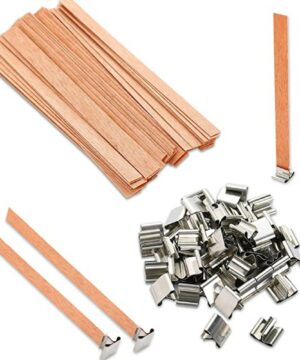
For natural waxes with heavier scents, like amber or sandalwood, wooden wicks often work very well because they generate slightly more heat. Unsure about the right choice? Read our tips for making candles with fragrance oils.
-
€2.95 – €174.95 incl. VAT Select options This product has multiple variants. The options may be chosen on the product page
-
€7.16 – €219.96 incl. VAT Select options This product has multiple variants. The options may be chosen on the product page


Identifying and Solving Problems
Does your candle still lack a strong scent, or do you see strange bubbles? Often the cause can be traced back to temperature or ratios.
If your candle smells weak when unlit (Cold Throw), you likely added the oil too hot, causing part of it to evaporate, or you didn’t let the candle cure long enough. Can you barely smell it when the candle is burning (Hot Throw)? Check your wick size. If the melt pool isn’t deep enough, the scent won’t be released. Do you see oil sitting on top of the candle (sweating)? Then you used too much fragrance oil or didn’t stir the oil in properly. Always remember those essential two minutes of stirring.
Making the perfectly scented candle is a process of testing and taking notes. Always write down the temperatures at which you add oil and pour. This way, once you have made that perfect candle, you can repeat your success time and time again.
-
€5.95 – €179.95 incl. VAT Select options This product has multiple variants. The options may be chosen on the product page